A Global Conversation on Sport and Social Change
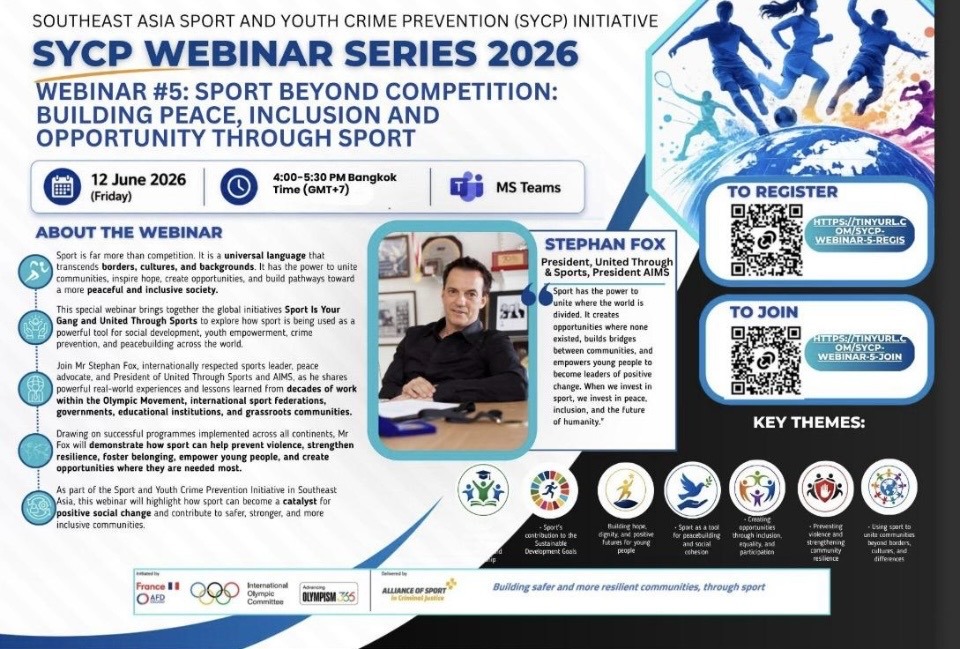
The latest webinar from the Southeast Asia Sport and Youth Crime Prevention (SYCP) Initiative, Sport Beyond Competition: Building Peace, Inclusion and Opportunity Through Sport, brought together delegates from across the world to explore how sport can contribute to peace, inclusion, youth empowerment, crime prevention and community resilience.
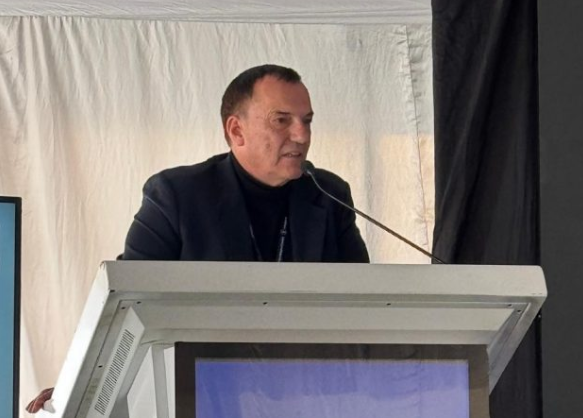
The session featured Stephan Fox, President of United Through Sports, President of AIMS, and Chair of the SportAccord World Combat Council, as keynote speaker. Delegates included representatives from the Olympic and sporting family, international federations, community organisations, educators, youth leaders and stakeholders committed to using sport as a force for positive social change. UTS Young Leaders also joined from across the globe, each asking vital questions and opening discussion on what young athletes can contribute and their role and responsibility through sport.
Through a series of educational webinars and collaborative activities, the Southeast Asia Sport and Youth Crime Prevention Initiative continues to strengthen regional and global dialogue around the role of sport in creating safer communities and positive opportunities for young people. The initiative brings together sport organisations, governments, educators, community leaders, law enforcement agencies and international partners to explore innovative ways of using sport to prevent crime, promote social inclusion and strengthen community resilience.
The initiative aligns closely with the vision of the International Olympic Committee, Athletes365, the Alliance of Sport, United Through Sports and the broader Olympic Movement in recognising sport as a tool for sustainable development, social inclusion and community empowerment.
Sport as a Pathway to Belonging
Speaking during the session, President Fox emphasised that sport must be viewed as far more than competition.
Stephan Fox said:
“Sport changes lives not because it produces champions. Not because it fills stadiums. Not because it generates headlines. Sport changes lives because it gives people something every human being needs: hope, belonging, purpose, and opportunity.”
Drawing on examples from communities around the world, President Fox highlighted how sport and martial arts are helping young people avoid gangs, violence, extremism, drugs, crime and social exclusion by providing positive pathways, positive role models and safe environments where they can thrive.
A central theme of the presentation focused on the importance of creating safe spaces. For many young people, particularly vulnerable youth, migrants and refugees, sport can provide much more than physical activity. Sports clubs and community programmes often become places where young people feel supported, valued and connected.
The webinar explored how sport and martial arts contribute to crime prevention, rehabilitation, youth protection, community development and social cohesion. Participants discussed the role of sport in providing structure, discipline, respect, self-control, leadership opportunities, mentorship and a sense of purpose.
Fox also stressed the unique value of martial arts, noting that their greatest lesson is not how to fight, but when not to fight. The discussion highlighted how martial arts can teach self-control, responsibility, conflict resolution and respect, helping young people develop skills that extend well beyond sport itself.
Safeguarding Young People in Sport
Special attention was given to safeguarding and protecting young people within sport. Participants examined challenges including human trafficking, abuse, exploitation, competition manipulation and the importance of ensuring that sport remains a safe and ethical environment for all participants.
President Fox reminded delegates that no medal, title or commercial success can ever be more important than the safety, dignity and human rights of a child.
The webinar further highlighted the growing role of sport in supporting refugees and displaced communities. Participants discussed how sport can help create opportunities for belonging, connection and healing for those rebuilding their lives following conflict, displacement or hardship.
Partnership, Responsibility and the SDGs
A key message throughout the session was that no single organisation can solve today’s complex social challenges alone.
Successful crime prevention, youth protection, rehabilitation and social inclusion require partnerships between governments, the United Nations, the Olympic Movement, schools, universities, law enforcement agencies, health services, community organisations, sports federations, athletes, coaches and civil society.
The initiative directly supports the United Nations Sustainable Development Goals, particularly those relating to health, quality education, gender equality, reduced inequalities, peace, justice and strong institutions.
The discussion also recognised the growing expectations placed upon International Federations, many of which are expected to address issues ranging from anti-doping and safeguarding to mental health, human trafficking, sustainability, inclusion and social development.
Fox emphasised that stronger cooperation, knowledge sharing and partnerships across sport are essential to ensure that these responsibilities can be effectively fulfilled.
The webinar concluded with a powerful call to action and a reminder of sport’s wider purpose and responsibility.
“The true power of sport is not measured by the medals it produces, but by the lives it changes.”