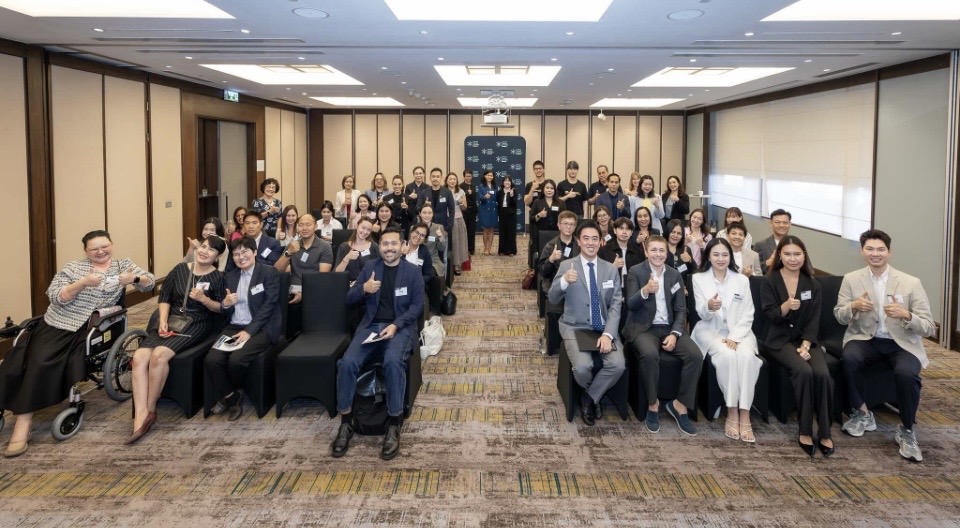
On Friday 27th March 2026, the Thailand Business and Disability Network (TBDN) convened organisational leaders and international organisations at the Crowne Plaza Lumpini Park, Crowne 4-5 Rooms, 21st Floor, for a bilingual session running from 10:00am to 12:00pm, exploring how more inclusive approaches can be embedded into business and workplace practice. The agenda moved through three structured conversations: why TBDN exists, the benefits and features of membership, and insights from founding members, before closing with networking.
The context for this work is significant. According to TBDN’s own data, an estimated 11.3 million people in Thailand, around 16% of the population, live with a disability, while a further 23 million customers are either disabled themselves or closely connected to someone who is. Yet fewer than 25% of people with disabilities in Thailand are in employment. This is the gap that TBDN is designed to help close.
TBDN is a national employer network established by Steps, a Bangkok-based social enterprise, in partnership with the ILO Global Business and Disability Network, a body whose global membership includes organisations such as Deloitte, HSBC, Microsoft, Unilever, and Standard Chartered. The network connects organisations that want to improve accessibility, build inclusive hiring and leadership pathways, and exchange practical solutions. Its founding members in Thailand include IHG Hotels & Resorts, Sasin Inclusion, and Steps itself, with key partners including the British Chamber of Commerce Thailand and the Neurodiversity at Work Research Centre.
Julia Govinden, CEO of United Through Sports and a newly appointed Associate Member of TBDN, attended the session to hear, learn, and engage in discussions on how organisations can strengthen their approach to inclusion through practical action and shared understanding.
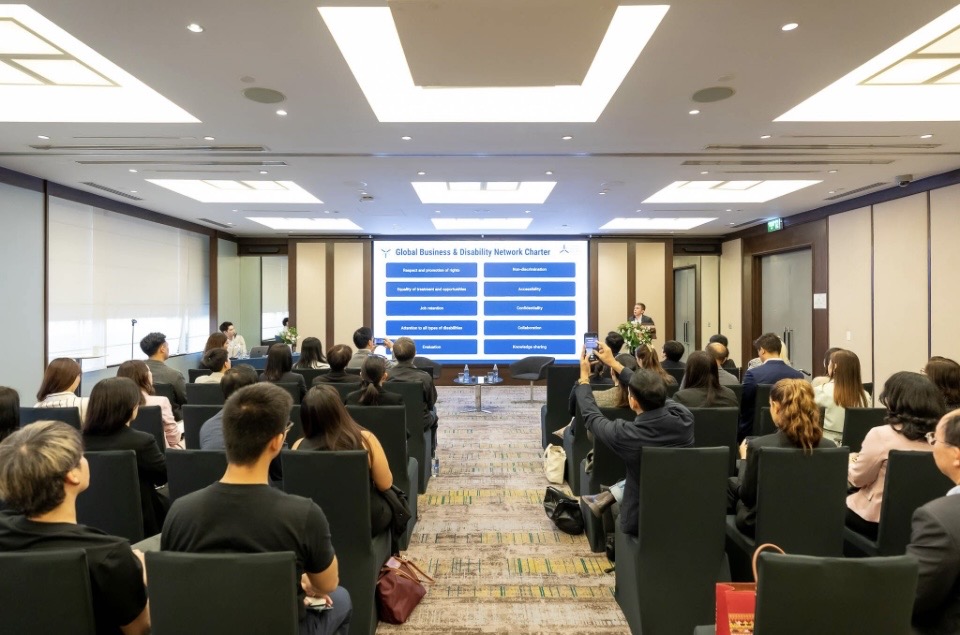
A central theme of the session was the concept of “disability confidence”, defined by TBDN not as a fixed standard but as an ongoing goal. A disability-confident organisation, in TBDN’s framework, is one that understands how disability inclusion affects talent, customers, employees, suppliers, and communities; ensures its environments and processes are barrier-free; routinely adapts practices so individuals can contribute and thrive; avoids assumptions about human potential; and invests responsibly in the wider labour market as an active ally of persons with disabilities. The discussion moved away from broad commitments and focused instead on how organisations can respond in ways that are considered and realistic in day-to-day environments.
The peer-to-peer model that underpins TBDN is central to how it delivers this. Rather than expecting organisations to arrive with fully developed solutions, the network supports learning that is gradual and grounded, shaped by real situations and informed by shared experience. As TBDN’s own materials state, business disability networks operate where the needs of business and the aspirations of disabled people coincide, and peer learning adds value by providing scalable solutions co-created within the Thai context. The 2026 roadmap includes quarterly learning sessions through enterprise visits and workshops, piloted inclusion tools including accessibility frameworks, and a flagship Inclusion Fair in Q2, culminating in a signature event for International Day of Persons with Disabilities in Q4.
Max Simpson, CEO and founder of Steps and the driving force behind TBDN, said: ” We’re here to help companies network inclusion – to take it from one programme or one CSR initiative and make it part of their strategic framework to meet the needs of employees, customers, and team growth.”

The session also encouraged a broader view of how disability is understood within organisations. Rather than treating it as something fixed or defined solely by formal registration, the discussion explored how environments, systems and everyday practices can either enable or limit participation. This shift places greater responsibility on organisations to examine how their own structures operate and to go beyond merely meeting Thailand’s statutory 1:100 employment quota, towards building workplaces where diverse talent can genuinely thrive. TBDN’s data also highlights the business case: 70% of national wealth in Thailand is owned by people over 50, an age group with a significantly higher likelihood of disability, making accessibility not just a social responsibility but a commercial opportunity.
For organisations working across international and community-based contexts, these discussions carry direct relevance. The work of United Through Sports centres on creating environments where young people of all abilities can participate and feel supported in sport and beyond. The values that underpin TBDN’s charter, including non-discrimination, equality of treatment, accessibility, collaboration and knowledge sharing, reflect the same principles that guide UTS’s programmes globally.
Dr. Namnam, Director of TBDN said:“Members can move at their own pace. Every organisation is different and has different needs. We support each member to make progress.”
What stood out from the session was that inclusion cannot be treated as a fixed outcome. It develops over time, shaped by experience, reflection, and collaboration. Networks such as TBDN create the conditions for that to happen, providing access to research-backed tools, closed peer roundtables, and strategic advisory support that allow organisations to engage with challenges openly and move forward with greater clarity.
TBDN Associate Julia Govinden said: “At United Through Sports, we believe inclusion is built in practice, not only in policy. Being part of the TBDN network allows us to learn from peers who are putting that into action every day, and to bring those lessons into the work we do for young people across the world. Inclusion must be lived, not just declared.”