611 athletes. 55 nations. 79 medal events. Stories that go far beyond the podium.
On 6 March 2026, the ancient Arena di Verona opened its arms to the world’s greatest para-athletes for the opening ceremony of the XIV Winter Paralympic Games. The theme was Life in Motion, and over the nine days that followed, athletes across 55 nations gave that phrase a meaning no scriptwriter could have invented.
Milano Cortina 2026 marks the 50th anniversary of the inaugural Winter Paralympics, held in Ornskoldvik, Sweden in 1976. This edition is the biggest and most visible in the Games’ history, and the first to introduce wheelchair curling mixed doubles as a medal event, a reminder that the Paralympic movement never stops expanding the circle of who belongs.
For United Through Sports, these Games represent everything the organisation was built to champion. The spirit of inclusion that defines Milano Cortina 2026 is not a slogan. It is a movement, and one that UTS has been part of since its founding in 2018.
A LEGACY OF INCLUSION
The Milano Cortina 2026 Games have placed social inclusion at the very core of their legacy. Through the GEN26 education program, which has already reached over two million students across Italy, the values of the Paralympic movement are being woven into the fabric of the next generation. School gyms in remote Alpine towns have been refurbished for accessibility, and seated-fit styles introduced in official team uniforms. When a host nation takes Paralympic values seriously, the Games become a catalyst for change that outlasts the closing ceremony.
At UTS, we see the Paralympics as more than a competition. They are a proving ground for a more inclusive world, and every structural change made in the name of these Games is a permanent gift to the communities that host them.
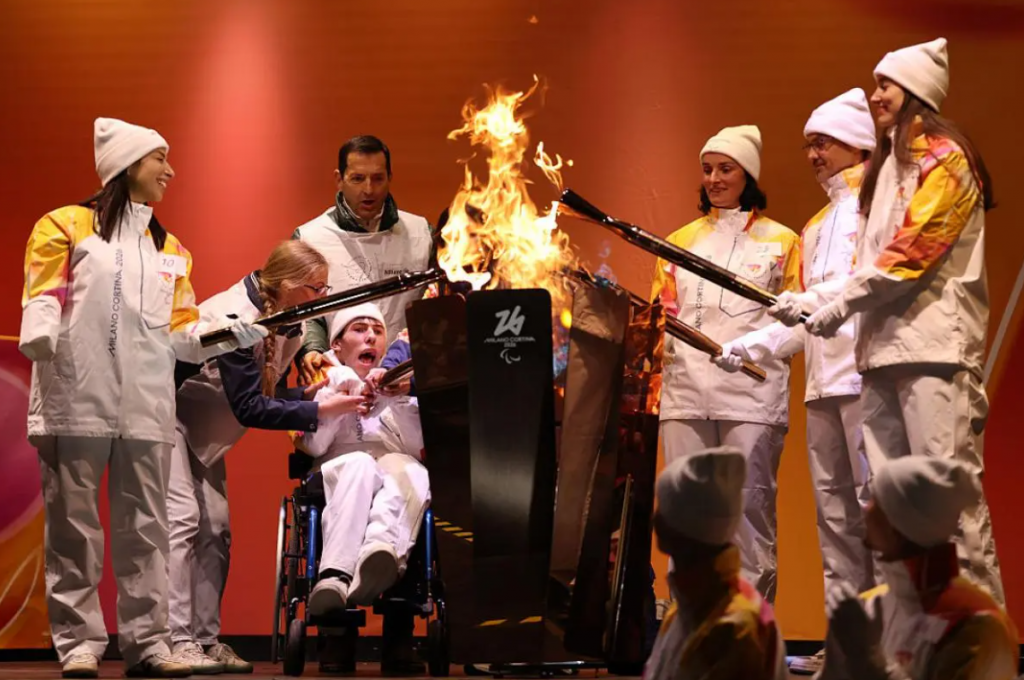
ⒸLinnea Rheborg/Getty Images for IPC
OUR HIGHLIGHTS FROM THE GAMES
Day 1: America and Austria announce themselves
Oksana Masters won the para biathlon women’s sitting sprint, with teammate Kendall Gretsch just 16 seconds behind, giving the United States a gold and silver double on the opening day. Both athletes shot 10 from 10 on the range, turning the race into a pure test of speed. Austria’s Johannes Aigner and guide Nico Haberl claimed gold in the men’s visually impaired downhill in Cortina.
Day 2: Italy’s golden Sunday
Emanuel Perathoner gave the home crowd exactly what they had hoped for, winning Italy’s first gold of the Games in the men’s para snowboard cross. China took four gold medals in para biathlon on the same day, powering to the top of the early medal table.
Days 3 and 4: Comebacks, history and firsts
Jeroen Kampschreur of the Netherlands returned from a heavy Day 1 crash to win Gold, ending Norwegian Jesper Pedersen’s dominant run. Italy recorded their first ever Paralympic victory in para ice hockey, defeating Germany 2-1. Belarus’s Raman Svirydzenka, born in 2004, became his nation’s first ever Paralympic gold medalist in cross-country skiing. Brazil took their first Winter Paralympic medal, and five nations competed at the Winter Games for the very first time.
EXCELLENCE BEYOND THE PHYSICAL: OKSANA MASTERS
Masters was born in 1989 in Khmelnytskyi, Ukraine, with birth defects believed to be connected to the Chernobyl nuclear disaster. Her early years were spent in orphanages and she had both legs amputated before the age of 14. Adopted at age 7 by Gay Masters, a professor at the University of Louisville, she made her Paralympic debut in para rowing at London 2012. A back injury ended that career, so she took up cycling in rehabilitation. Cycling led to cross-country skiing. Skiing led to biathlon.
She arrived in Italy having missed her entire 2024-25 season to a bone infection and a concussion. Two days before the opening ceremony she wrote:
I don’t know what kind of skier I’ll be when I race again in a few days. But I know I’ll be one who fights to get back.
Oksana Masters
She then won gold on Day 1. And again on Day 4.
Her tally at Milano Cortina stands at 21 Paralympic medals across four sports and eight Games. 11 gold. 7 silver. 3 bronze. The most decorated American Winter Paralympian in history. The first Para athlete ever nominated for Best Female Athlete at the ESPYs.
“Every single medal is just as important because it has a different journey and path to getting it and achieving it.”
Oksana Masters, after winning her 20th Paralympic medal, Milano Cortina 2026
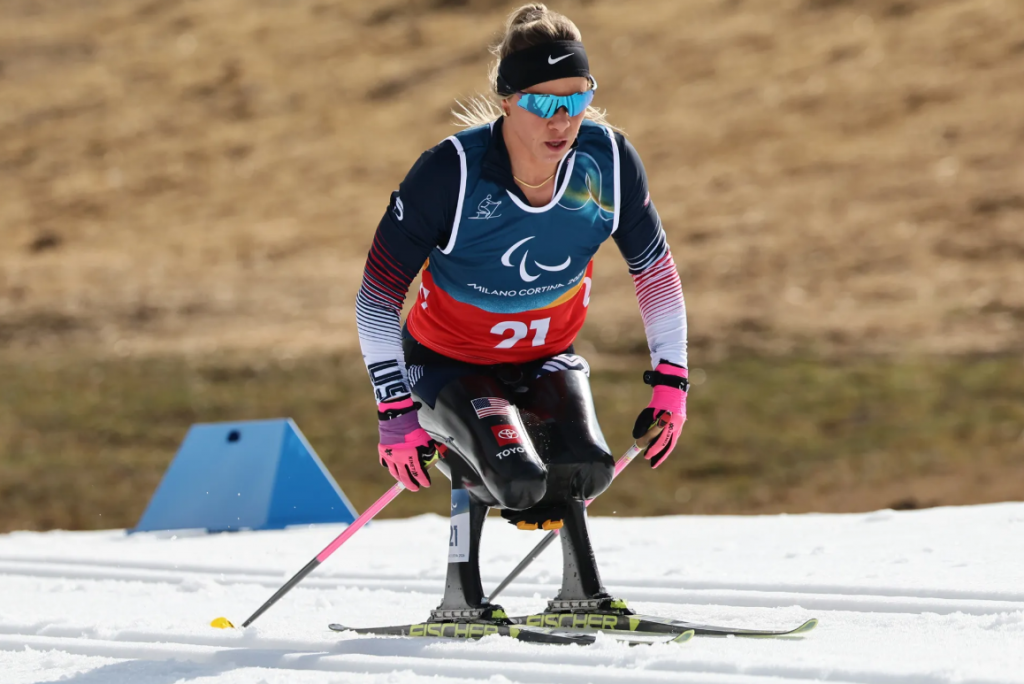
Marcus Hartmann/Getty
EXCELLENCE BEYOND THE PHYSICAL: GIACOMO BERTAGNOLLI
Italy’s Giacomo Bertagnolli was born with a progressive retinal condition. He began skiing as a child before his sight deteriorated, and when it did, he did not stop. His partnership with guide Andrea Ravelli demands extraordinary communication and trust. The guide skis ahead and calls the course through a radio headset in real time, and a fraction of a second’s mistiming at 100 kilometres per hour can mean a crash rather than a medal.
At Milano Cortina he carried the weight of a home nation’s expectation and delivered. Bronze on Day 1. Silver on Day 3. Gold on Day 4 in the combined. Eleven Paralympic medals across three consecutive Games, with at least one gold at each.
WHY THE PARALYMPIC GAMES MATTER
For athletes competing in para-alpine skiing, para biathlon, para ice hockey, para snowboard and wheelchair curling, the Paralympic Games are the pinnacle. They are the moment for which four years of training, surgery, rehabilitation and reinvention have been building. The Games exist to give those achievements the platform they deserve.
They concentrate global attention on para-athletes for a defined, high-visibility period and create the conditions for storytelling that changes public perception of what people with disabilities are capable of. That visibility has consequences: for funding, for participation, and for the children watching at home who see themselves in an athlete for the first time.
UTS has long held that sport is not a privilege to be earned but a right to be protected. The Paralympic Games are the most powerful expression of that principle in the global sport calendar. When we remove barriers, we do not diminish sport. We expand it.
“The Paralympic Games remind us why United Through Sports exists. These athletes do not need our admiration. They need our commitment to removing every barrier between them and the sport they love. That commitment is the work.”
Stephan Fox, President, United Through Sports
The GEN26 program reaching two million Italian students is the long game. The children who learn Paralympic values in school are the coaches, architects and policy-makers of the future, and the ones who will decide whether accessible infrastructure becomes standard or remains the exception.
“No athlete should stand in the shadows. Every single one deserves a spotlight to grow, shine and thrive, not as a privilege, but as a right. We see athletes such as Oksana who has won medals across multiple sports, this is not only Paralympic excellence, but athletic excellence across any standard! “
Julia Govinden, CEO, United Through Sports
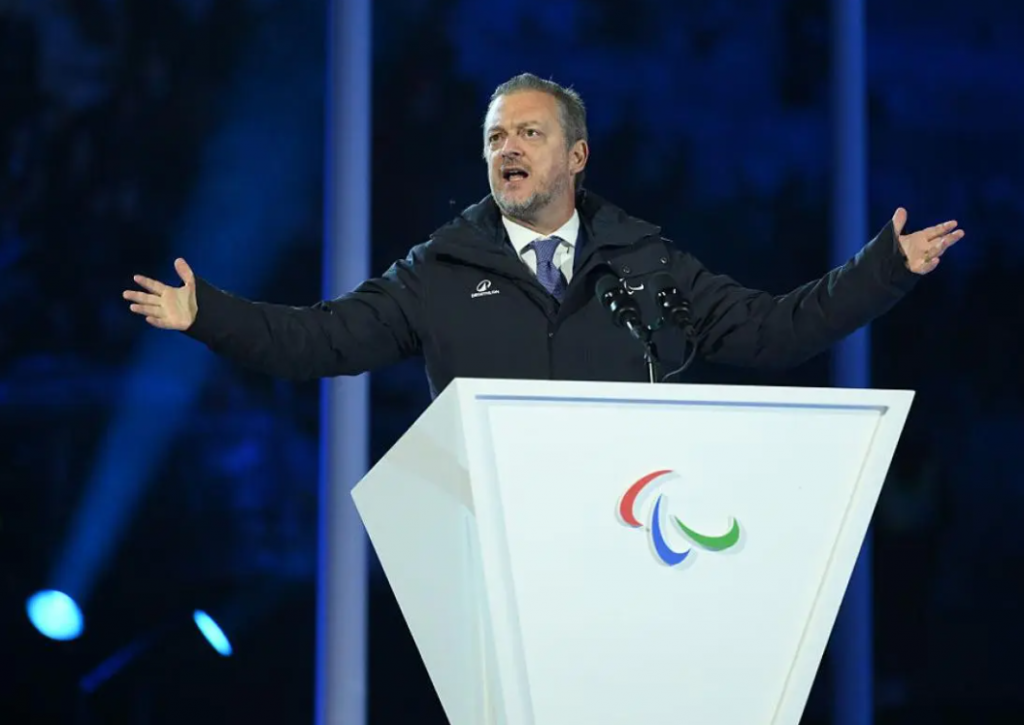
ⒸDavid Ramos/Getty Images By IPC
The Games continue until 15 March 2026.
United Through Sports stands with the athletes in Milano and Cortina, and invites the world to look beyond the medals and see the movement. Every gesture, however small and however far from any podium, has the power to change the world.