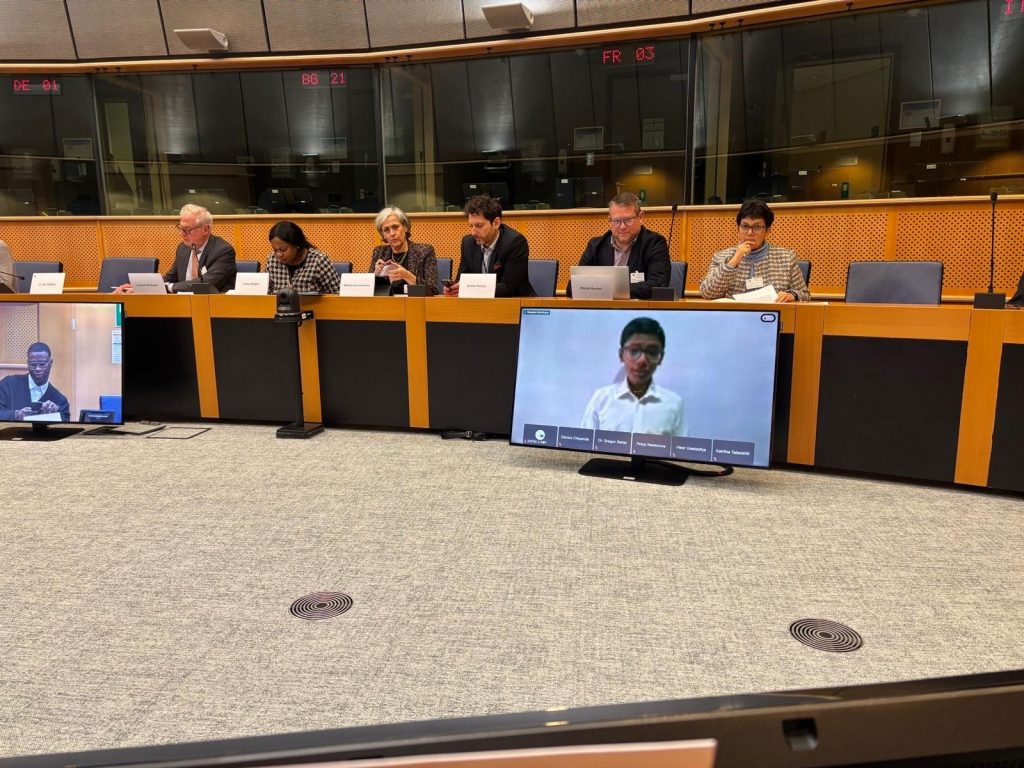
On 29 January, the European Parliament in Brussels hosted a high-level roundtable examining child trafficking in, through and around sport. By bringing the discussion into the heart of EU decision-making, the session marked an important step in recognising exploitation linked to sport as a political and governance issue, rather than one confined to safeguarding policy alone.
The roundtable was organised by Mission 89 in partnership with United Through Sports (UTS), and hosted by the European Parliament Intergroup on Children’s Rights with the support of MEP Hilde Vautmans. Policymakers, sport organisations, civil society representatives and athlete voices came together to examine evidence, share institutional perspectives and consider the role of the European Union in strengthening protection for young athletes.
Mission 89 and The Line We Don’t Cross Campaign
Mission 89 is an international organisation advancing safeguarding, integrity and human rights in sport. Its work addresses exploitation and abuse linked to sporting systems through policy engagement, education and accountability mechanisms.
In July 2025, Mission 89 launched the Line We Don’t Cross campaign in partnership with United Through Sports. The campaign responds to mounting evidence of child trafficking connected to sport and seeks to establish clearer expectations around recruitment practices, safeguarding responsibilities and organisational accountability. Central to this initiative is the United Declaration on the Elimination of Child Trafficking in, through and around Sport, which sets out commitments on ethical recruitment and safeguarding standards.
Setting the political context
Opening the session, MEP Hilde Vautmans, Vice-Chair of the European Parliament Intergroup on Children’s Rights, framed child trafficking in sport as a political responsibility that belongs firmly within the European Parliament. Reflecting on her first parliamentary mandate, she recalled repeatedly questioning where missing children in Europe had gone and argued that sport must now be included in that conversation. She stressed the need for sustained political attention and for policymakers to continue examining where children may be falling through existing protection systems.
The EU policy perspective
The EU policy context was set out by Diane Schmitt, the EU Anti-Trafficking Coordinator, who outlined how existing EU legal instruments can be leveraged to address child trafficking in sport. She emphasised that effective policy responses require equipping frontline actors, including civil society organisations, sports associations and federations, health services and law enforcement; with appropriate training and resources to detect and respond to trafficking cases.
Ms Schmitt identified the private sector, including international sports organisations and federations, as key actors with the capacity to conduct awareness-raising, apply due diligence, and support the detection and referral of potential cases. She stressed the importance of strengthening judicial cooperation, financial investigations and asset confiscation measures in order to disrupt trafficking networks. Her intervention underlined that prevention and protection frameworks must operate across multiple sectors, with sports bodies playing an active role alongside EU institutions.
Evidence from research
The evidence underpinning the discussion was presented by Dr Katarina Schwarz, Associate Professor at the University of Nottingham, who introduced findings from the Global Thematic Report on Sport Trafficking. The report develops a novel definition of sport trafficking and identifies five categories of actors commonly involved: athletes and aspiring athletes, intermediaries and agents, sports organisations, families, and external actors.
Crucially, the report highlights that each type of trafficking requires a distinct policy response. Exploitation in sport calls for strengthened governance and oversight within sports structures. Trafficking through sport highlights the need for transparency, regulation and monitoring of recruitment practices. Trafficking around sport necessitates attention to supply chains and event-related risks. Dr Schwarz drew attention to the report’s interpretive guidance, which clarifies how existing international, regional and domestic anti-trafficking law should be applied to cases arising in and through sport, providing a practical framework for institutions ready to take action.
Perspectives from institutions, sport and civil society
A moderated discussion chaired by Laurent M.J. De Boeck of Mission 89 brought together representatives from EU institutions, international bodies, sport organisations and civil society.
Petya Nestorova, Executive Secretary of the Council of Europe GRETA, highlighted that existing victim identification mechanisms do not explicitly address sport trafficking, creating blind spots in protection. Ambassador Michel Veuthey, representing the Sovereign Order of Malta’s work on combating trafficking, stressed the importance of deploying trained medical staff and sporting officials at events and camps to recognise early warning signs and guide athletes towards reporting mechanisms.
From within sport governance, Marie-Laure Lemineur, Head of Safeguarding and Child Protection at FIFA, acknowledged the responsibility of sport to reduce risk through regulation, awareness and sanctions. She referred to FIFA’s ethical recruitment guide for football agents, developed in collaboration with Mission 89, and highlighted the role sporting sanctions can play when aligned with state justice systems.
Dr Gregor Reiter attended on behalf of Roberto Branco Martins, representing the European Football Agents Associations. He emphasised the importance of education for clubs, players and parents regarding recruitment processes and the operation of agents. Dr Decius Chipande, representing the African Union Sports Council, joined the session online and drew attention to the limited development of safeguarding frameworks across much of the African continent, where sport trafficking often remains overlooked. Civil society perspectives were provided by Suzanne Hoff of La Strada International, who noted that both children and adults are affected, with male victims in football frequently under-identified.
From an organisational leadership perspective, Stephan Fox, President of AIMS and United Through Sports, contributed via a pre-recorded video message. In his address, he underscored safeguarding as a fundamental and shared responsibility across the global sporting ecosystem. He reaffirmed the commitment of both organisations to the protection and wellbeing of young athletes, emphasising that safeguarding must guide leadership and governance at every level of sport.
Athlete experience in focus
Athlete experience remained central to the discussion. Professional footballer Katriina Talaslahti reflected on the safeguarding risks faced by athletes competing abroad, particularly where language barriers, limited contractual understanding and visa-related fears make it difficult to seek help or report concerns.
Youth perspectives were further strengthened through contributions from United Through Sports Young Leaders. Heer Usadadiya, Ugandan national swimmer and UTS Young Leader, spoke about the pressure faced by young athletes from developing regions who are often targeted by agencies promising opportunities abroad. She stressed the need for stronger protection standards and for young athletes to be meaningfully included in safeguarding discussions.
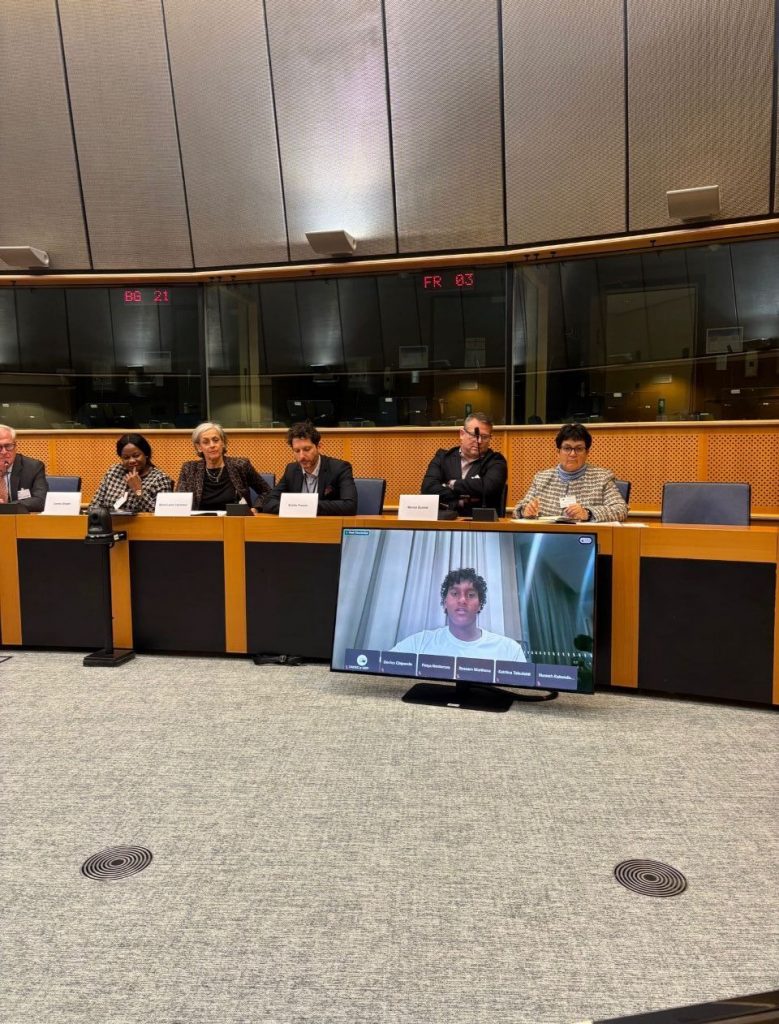
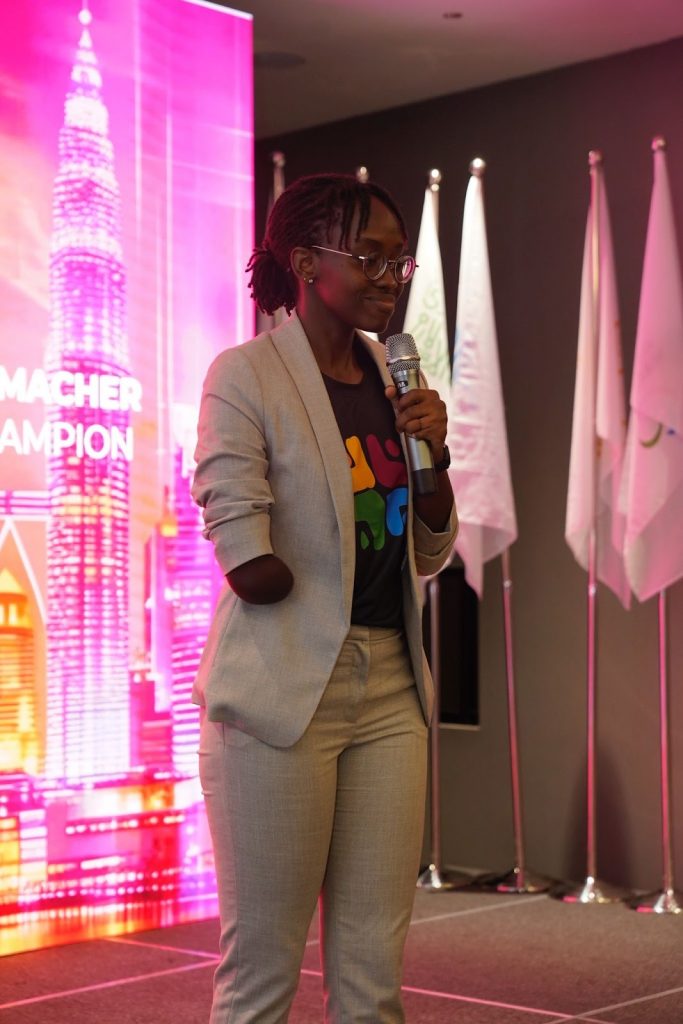
Husnah Kukundakwe, UTS Young Leader, Ugandan para swimmer and the youngest athlete to represent Uganda, delivered her contribution in a video message following the conference. She spoke about the power of the sporting dream and warned that it is increasingly used as a tool of deception, calling for greater awareness of athletes’ rights and a collective commitment to draw clear boundaries against exploitation.
Bassam Murthasa, UTS Young Leader and Muay Thai athlete from Sri Lanka, highlighted the lack of accessible information for athletes and their families. He noted that many athletes rely heavily on coaches and organisers and are often unaware of their rights, while safeguarding standards can vary significantly between events.
Why this session mattered
In closing remarks, Emilio Puccio delivered reflections on behalf of MEP Hilde Vautmans, reinforcing the European Parliament’s commitment to addressing child trafficking in sport as part of its broader child protection mandate. Closing remarks were also delivered by Belle Tucker on behalf of United Through Sports, emphasising the responsibility of sport organisations to translate dialogue into sustained structural change.
Lerina Bright, Executive Director of Mission 89, underscored the importance of ensuring that commitments made within institutional settings are followed by coordinated and measurable action.
By convening this roundtable within the European Parliament, the session signalled greater political ownership of an issue that has too often remained at the margins of sport governance. At a time when the European Union is shaping its future anti-trafficking priorities, the roundtable demonstrated how policy tools, legal frameworks and athlete voices can be brought together to strengthen prevention, protection and accountability across sport.
Mission 89 and United Through Sports extend their thanks to the UTS Young Leaders for their leadership and courage in contributing to this discussion and for ensuring that the voices of young athletes were heard at the highest political level.