On Wednesday, 23 September 2026, United Through Sports CEO Julia Govinden joined business leaders, disability inclusion advocates and organisational representatives in Bangkok for the Thailand Hub of the PurpleSpace Global Disability ERG Summit.
The session was delivered by PurpleSpace in cooperation with Steps and the Thailand Business and Disability Network (TBDN) at the Crowne Plaza Bangkok Lumpini Park. It formed part of a wider global summit designed to create conversations and impact across 72 countries, with 10 sessions taking place simultaneously around the world.
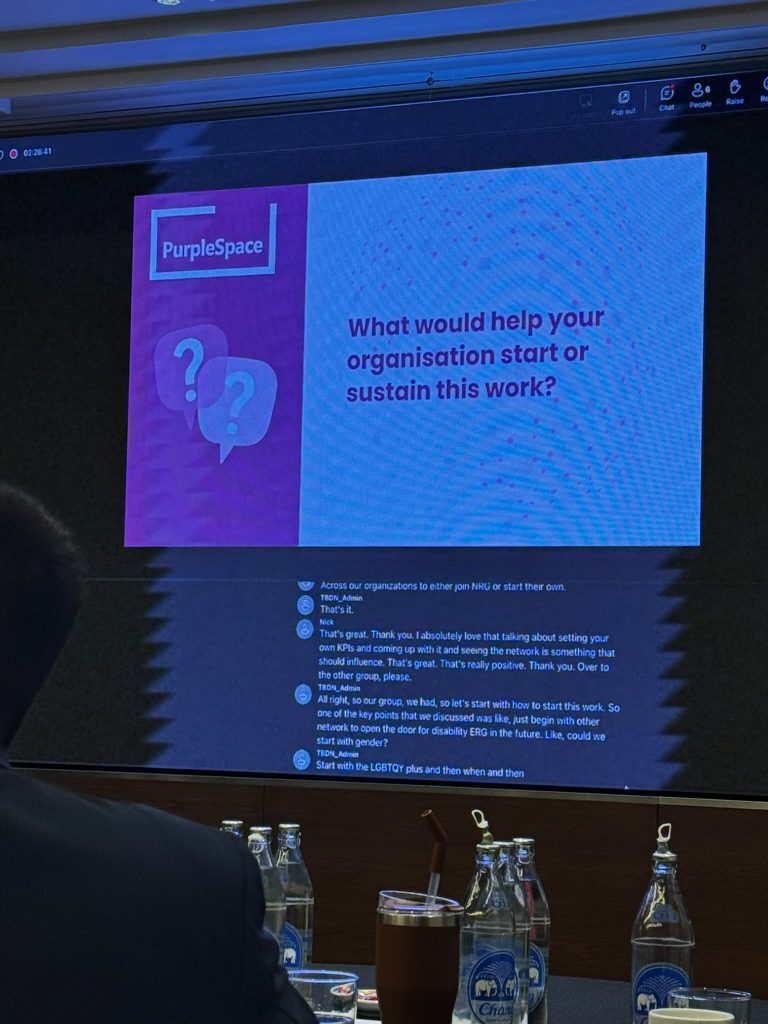
Following an introduction from representatives of the PurpleSpace Global Disability ERG Summit, participants in Thailand divided into smaller groups to discuss two central questions: How do we demonstrate impact? And how can we help organisations begin and sustain this work?
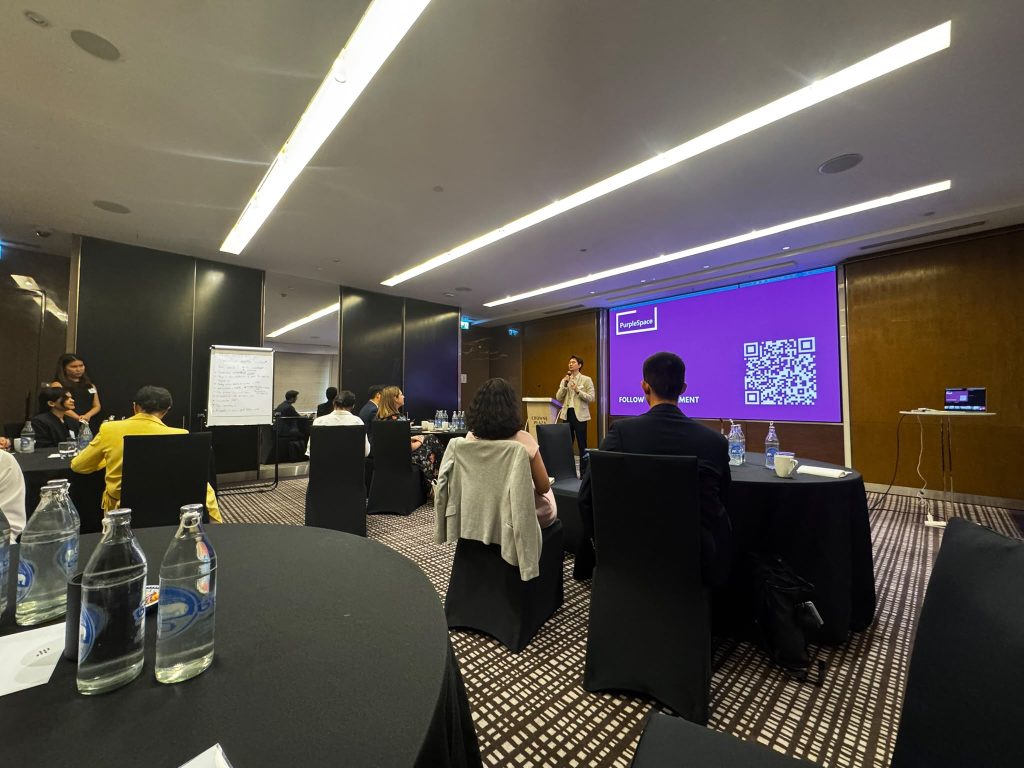
The discussions focused on how Employee Resource Groups and employee networks can move disability inclusion beyond statements and policies and turn it into a visible, lasting part of organisational culture.
Understanding What Impact Looks Like
Participants explored the different ways organisations can measure progress. While figures and employment targets remain important, the discussion highlighted that impact cannot be understood through numbers alone.
Qualitative and descriptive measures, including employee surveys, personal feedback and conversations about wellbeing, can help organisations better understand the experiences of employees with disabilities. Listening directly to people with disabilities, including young people, was recognised as essential to identifying barriers, increasing awareness and ensuring that inclusion initiatives respond to people’s actual needs.
Partnership-building, organisational learning and a stronger understanding of disability were also identified as important indicators of progress. These measures can show whether an organisation is building the knowledge and relationships needed to create long-term change.
Participants also discussed a question faced by many employees and job applicants: what are the potential benefits of disclosing a disability, and what support must an organisation have in place for a person to feel safe doing so? Disclosure should give an employee access to appropriate support and reasonable adjustments, but this depends on trust and confidence that the information will not negatively affect their opportunities.
Starting and Sustaining Employee Networks
Some participants shared that their organisations wanted to create disability Employee Resource Groups or networks but did not know where to begin. A key recommendation was to seek guidance from organisations that already have established networks and learn from their experiences.
However, employee-led networks cannot be expected to succeed without organisational backing. Visible support from senior leadership, sufficient resources and access to training were identified as essential. Inclusion must be reflected in company priorities and responsibilities rather than being left entirely to individual employees.
Allies and internal champions also have an important role. They can help make disability inclusion personal, bring others into the conversation and ensure that responsibility does not fall solely on employees with disabilities.
The session also considered Thailand’s requirement concerning the employment of people with disabilities. Participants noted that some organisations choose to make a financial payment rather than meeting the employment target. This raised a wider question about the difference between formally meeting an obligation and genuinely creating an inclusive workplace.
Internship programmes were discussed as one way to build routes into employment, but participants stressed that people with disabilities should not be expected to work without pay simply to gain experience. Internships should offer fair, meaningful opportunities and provide a genuine pathway towards longer-term employment.
Changing the Story Around Disability
The language and stories used to represent disability were another important part of the discussion. Apple’s “I’m Not Remarkable” campaign was raised as an example of storytelling that presents people with disabilities participating in everyday education and social life, rather than treating disability itself as inspirational.
Participants agreed that conversations about disability need to move away from limiting labels and portrayals based on pity. This is particularly relevant in Thailand, where attendees noted that mainstream media does not always provide enough space for people with disabilities to lead discussions about their own experiences.
Greater representation is needed to make disability part of everyday life. When people have little personal exposure to disability, misconceptions and discomfort can continue. More visible inclusion in workplaces, media and public conversations can help normalise disability as part of human diversity.
The discussion also considered how disability inclusion can connect with wider conversations about social barriers and identity, including LGBTQ+ inclusion. Bringing these conversations together can help organisations develop a more complete understanding of diversity and create workplaces where different experiences are recognised and respected.
Julia Govinden, CEO of United Through Sports, said: “Inclusion cannot stop at policy. It has to be felt by the person walking through the door. That means listening to people with disabilities rather than speaking for them, and building workplaces, sports and communities where they are not the exception, but simply part of everyday life.”
Julia’s participation reflected UTS’s wider commitment to ensuring that inclusion is present not only within sport but also across education, employment, leadership and community life. The Thailand Hub demonstrated that sustainable inclusion requires more than policy. It depends on listening to lived experience, investing in people and creating environments in which everyone has the opportunity to contribute.