For decades, the sporting world has spoken about true inclusion. From the 28th to 30th of August, judo delivered it in Lausanne.
The Vaudoise Arena staged an event that took the sport to new heights: athletes with and without disabilities competing in the same building, on the same tatami, on the same weekend and under the same banner.
The Ecole Mont-Olivet Lausanne Grand Slam 2026, organised by the International Judo Federation (IJF) together with Swiss Judo, the City of Lausanne and the Canton of Vaud, with the support of the International Olympic Committee, welcomed 513 athletes from 77 countries to the Olympic Capital.
Alongside the World Judo Tour event ran the Ecole Mont-Olivet Lausanne Adapted Judo Grand Slam and the Deaf Judo Masters.
Three competitions. One roof. One field of play.
No Grand Slam in the sport’s history had ever been built this way. And it happened only a short distance from the city United Through Sports calls home.
Why this matters to us
United Through Sports exists as an alliance of organisations and people working through sport to bring inclusion, unity and equality to the world.
Across the sporting movement, inclusion still too often exists in parallel structures: separate events, separate calendars, separate audiences. Between the principle and the programme lies a gap where good intentions can stall.
Over three days in August, judo and Lausanne closed that gap.
Not with a campaign.
Not with a declaration.
With a schedule.
This is the model UTS has championed across its World Youth Festivals, its Young Leaders network and its partnerships with the Olympic, Paralympic and Special Olympics movements: inclusion designed into an event from the very beginning, never added afterwards.
When a young athlete with a disability watches a competitor like themselves walk onto the main tatami, during the main programme and in front of the main crowd, no explanation is required. The message delivers itself.
Representation of that kind is not simply a gesture towards the next generation. It is one of the most powerful recruitment tools sport possesses.
It also affirms a conviction at the heart of everything UTS does: young people belong at the centre of sport, never at its margins.
Every child watching in Lausanne, whether from the stands or on a screen, saw a version of sport in which nobody had to be sent somewhere else in order to belong.
That is the version of sport they will grow up expecting.
And that is exactly the point.
UTS President Stephan Fox said:
“The judo family is a very special family within world sport. This weekend showed why. Inclusion and equity were not simply discussed; they were lived, on the tatami, in the programme and throughout the entire event. That only happens when leadership has the courage to turn values into action. President Marius Vizer and the International Judo Federation have set an example for the wider sporting movement, and they have our deepest respect. This is what inclusion should look like: one sport, one family and a place for everybody.”
UTS CEO Julia Govinden said:
“Society, governments and ministries need to understand the magnitude of events like this. With 1.8 billion people around the world living with a disability, seeing federations such as the IJF adapt, innovate and demonstrate genuine care is a major step forward for humanity. Thank you to President Vizer and the entire judo family for leading the way and ensuring that judo is truly for everybody.”
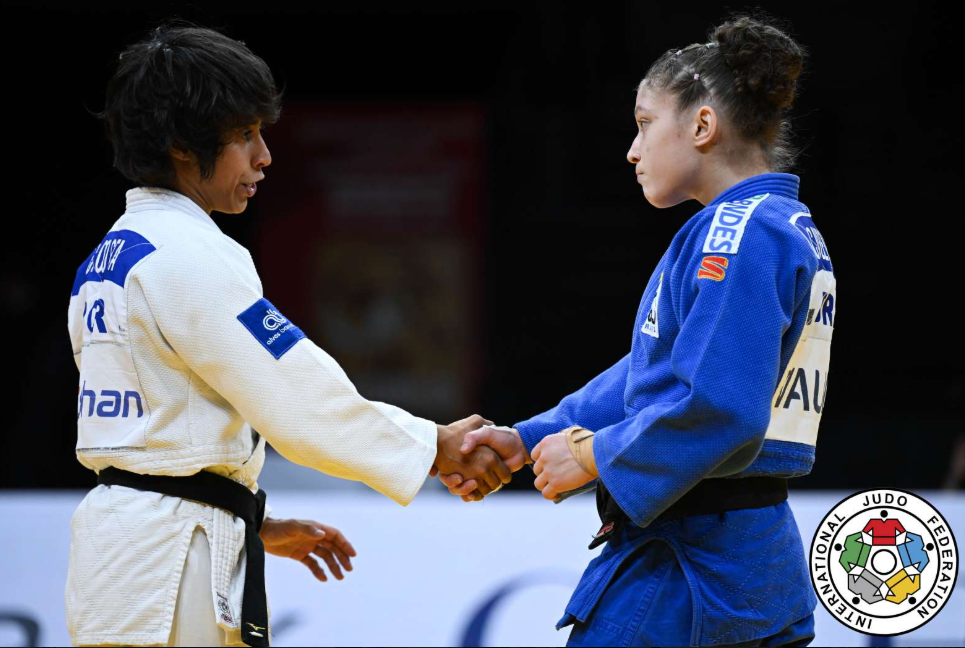
The moment that set the tone
The opening ceremony made the point before a single contest began.
Petra Oreskovic of Croatia, the first athlete with cerebral palsy who is unable to walk to earn a black belt in her country, performed a kata demonstration alongside Japan’s Joshiro Maruyama, a two-time world champion.
Not as a warm-up act.
Not as an interval feature.
But as part of the ceremony itself.
Event ambassador David Douillet, the double Olympic and four-time world champion, gave the weekend its sharpest line.
“This is the first competition that reflects what life itself should be,” he said. “There are no disabled people and no able-bodied people, there are only judoka.”
Japanese judo legend Yasuhiro Yamashita connected the format directly to the sport’s founding philosophy.
“This event truly embodies the philosophy of Judo for All,” he said. “Jita kyoei, mutual welfare and benefit, has the power to connect people.”
Two of the most decorated judoka in the history of the sport were describing an inclusive competition not as charity, accommodation or exception, but as a more complete expression of their own discipline.
That framing is worth remembering.
The competition itself
The elite programme delivered the depth expected of a Grand Slam: seven weight categories for men and seven for women, with 305 male and 208 female athletes representing five continents.
The European Judo Union fielded the largest contingent, with 306 competitors from 37 nations, while the Judo Union of Asia brought 124 athletes from 15 countries.
The medal table remained tight at the top. The Russian Federation, Japan, Germany and Georgia each finished with two gold medals, separated by silver and bronze counts, while France collected seven medals in total, the largest haul of the weekend.
The adapted competition opened proceedings on Friday, 28 August, with its medal ceremony scheduled for 15:00 as part of the main programme rather than around it.
That detail matters more than it may appear.
Parallel events for athletes with disabilities are common. Events that share the venue, officials, spectators, visibility and podium are not.
Visibility is not a by-product of inclusion. It is a fundamental part of it.
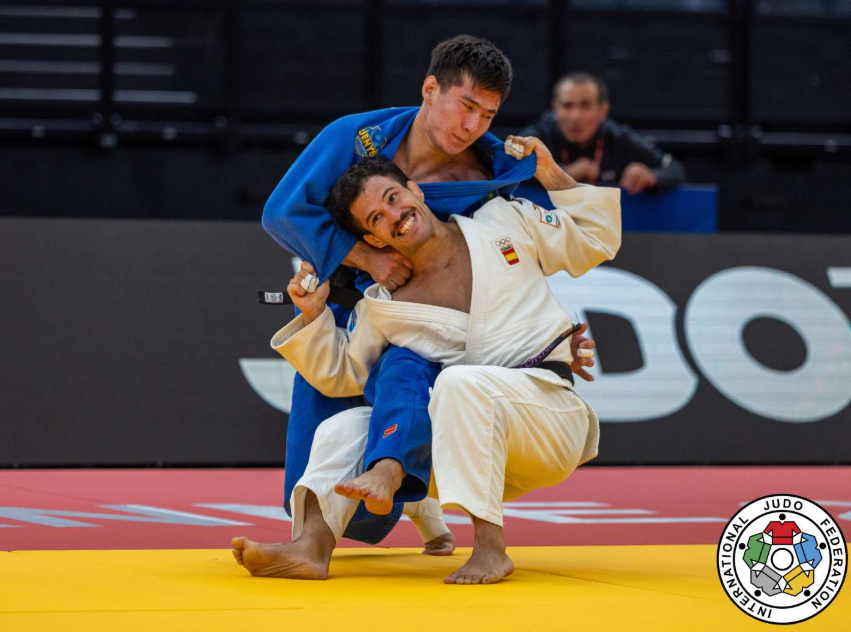
Lausanne offers a template that is neither complicated nor exotic.
It required no new sporting philosophy and no separate arena. It required a governing body willing to build one programme rather than separate worlds, and a host city prepared to welcome every athlete as part of the same event.
A major announcement at the conclusion of the weekend confirmed that Lausanne will host the 2028 World Judo Championships, giving the IJF a powerful opportunity to turn a landmark moment into a lasting standard.
Because that is the real measure of what happened in Lausanne.
The judo family did not spend the weekend explaining what inclusion could look like.
It showed us.
Not in a separate hall.
Not on another day.
Not under another banner.
One tatami. One family. Judo for all.