Kuala Lumpur, Malaysia: From 16 to 26 June, Kuala Lumpur became the centre of the Muaythai world. Athletes, coaches, officials, media teams, volunteers and supporters gathered for two major international events held back to back: the first ever IFMA and ISF World School Muaythai Championships and the IFMA Senior World Championships 2026.
Among them were three members of the United Through Sports team, Cheyenne, Aaliyan and Sean, each experiencing a world championship from the inside for the very first time. Sent to support IFMA across media, logistics and event operations, they spent ten days doing whatever the moment required: filming interviews, coordinating schedules, assisting officials and capturing the stories unfolding around them.
What follows are their reflections in their own words. Three different roles, three different perspectives, and one shared discovery of what it takes to deliver international sport, and what it gives back.
Sean’s Experience
Adapting to the Pace of the Event
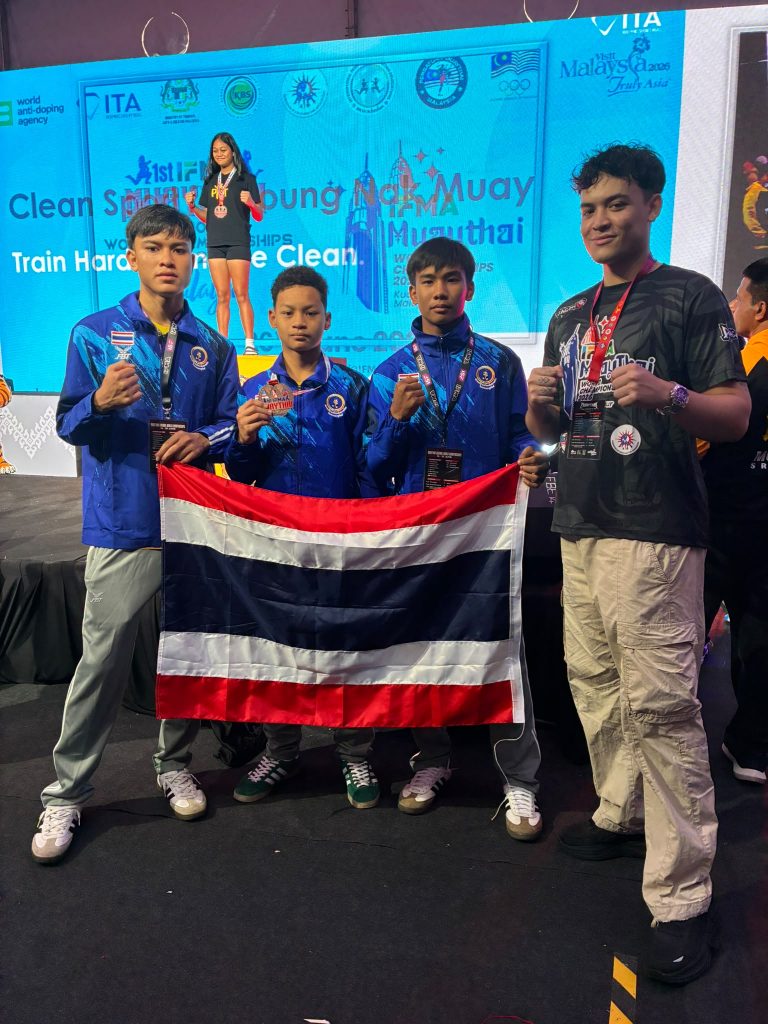
Going from working in the office to supporting a double championship event back-to-back was a huge change of pace. The sudden and intense shift definitely took some adjusting to, but I still managed to get through it and learned so much along the way.
I learned a great deal about myself and about our team, especially how we managed to work under immense pressure and still pull together to do an excellent job. I would not have been able to do any of it without their guidance and support, so a big thank you has to go to them as well.
Our team stayed in an amazing hotel located in the heart of Kuala Lumpur. We were very well taken care of by UTS President, Stephan Fox, who made sure that the event ran as smoothly as possible for everyone involved. The food at the hotel was marvellous, and my belly was always full by the end of the day. The bed was incredible too. I fell asleep within minutes every single time.
The hospitality we experienced in Malaysia was truly something to behold. The staff were always asking whether we needed anything and whether they could help make sure everything was running smoothly, especially with transportation to and from the venue.
Merdeka Square was an amazing location to hold the event, not only because of its historical importance as the place where Malaysia gained its independence, but also because the scenery around it was breathtaking. The buildings surrounding the square were incredible to see. Overall, I felt extremely honoured that Stephan personally selected me to travel to Malaysia and support the events.
Young Athletes and Lasting Lessons
As for the event itself, the fights were incredible. The School Championships were especially inspiring. The young athletes were genuinely amazing and talented. The technical skills, grit and heart shown by each young athlete were something I really admired. You could tell that every one of them had worked and trained extremely hard to prepare for their fights, and their effort and commitment deserve to be recognised.
Some athletes held their heads high after losing, while others were in tears. But in the end, they brought home more than medals or prizes. They left with valuable lessons and experience that will help them grow and become even better in their next endeavours.
The coaches of the young athletes were more than just coaches. From what I saw, they were mentors and guides in many different ways. You could see how much they cared for their athletes and how much pride they took in supporting them. The passion they showed in the corner of their respective athletes was unreal. It demonstrated not only how much they cared for the young people they were coaching, but also how proud they were to represent their countries and show the world the strength of Muaythai in their nations.
It was also a truly inclusive event, with athletes ranging from six years old all the way to 17 and then the senior event up to forty years old. The event did not only include bouts, but also featured the Muaythai traditional Wai Kru competition, along with Para and Special athletes division, competing to bring gold medals back to their nations.
The Senior World Championships was also something special. The level of skill displayed by athletes from every country was unbelievable. These were fighters at the very top of the sport, and I was surprised to see some of the countries represented, as I had never imagined Muaythai being practised so widely across the world. The sportsmanship displayed by every country was something to be admired. There were athletes whose nations may be facing conflict or tension, yet they still treated each other with respect and gratitude. It was amazing to see that, no matter what conflicts may exist between nations, sport can still bring people together.
In conclusion, it was an amazing event and a great showing of Muaythai to the world. It really showed that the sport is on a strong rise, and its trajectory can only go higher from here.
Sean’s reflection captures the experience of being part of the UTS team on the ground in Malaysia, quickly adapting to the intensity of an international event and supporting the work happening behind the scenes. His perspective highlights the pressure, teamwork, hospitality and powerful impression left by the athletes, coaches and wider Muaythai community.
While Sean reflected on the scale of the event and the team effort required to deliver it, Cheyenne’s experience focused on the emotional side of the championships: the stories behind the athletes, the resilience of young competitors, and the moments that often happen away from the podium.
Cheyenne’s Experience
Stories Beyond the Podium
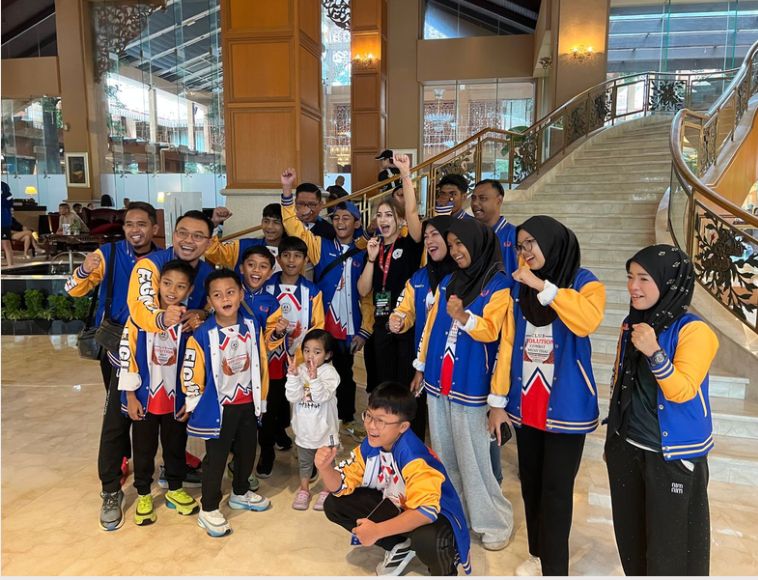
There are moments in sport that stay with you long after the medals have been awarded and the arena falls silent.
For me, those moments were not found on the podium. They were in the determined eyes of a young athlete stepping into the ring for the very first time. In the quiet focus before a bout. In the embrace between teammates after a hard-fought match. In the thousands of small moments that reminded me why sport continues to inspire people across generations.
Spending ten days in Malaysia covering both the IFMA ISF World School Muaythai Championships and the IFMA Senior World Championships was an experience unlike any other. Two international events, thousands of athletes, countless stories, and one shared passion connected everyone involved.
The first championship brought together more than 1,400 young athletes from around the world. The energy was electric from the moment the venue opened each morning. Every corner was filled with excitement, nerves, determination and dreams waiting to unfold.
What struck me most was not simply the level of competition. It was the resilience of these young athletes. Many had travelled across the world to represent their schools and countries. Some celebrated victories, while others experienced heartbreaking defeats. Yet regardless of the outcome, they kept showing up with courage, respect and an unwavering desire to improve.
Watching children demonstrate that level of discipline and perseverance was genuinely inspiring. It taught me the true meaning of resilience, not as an abstract term, but as something real unfolding right before my eyes. Behind every bout was a story: years of training, sacrifices made by families, coaches who believed in them, and young people discovering just how capable they really are. It was impossible not to admire their determination.
Capturing the Championships
My role shifted all the time, one moment I was filming for social media, and interviewing athletes for the Olympic Channel, video editing multiple videos simultaneously. Next I was moving chairs for people to sit.
However, working in the media department meant experiencing the championships from a completely different perspective. While athletes were preparing for competition, we were constantly racing against the clock to capture every moment. That included interviewing athletes after athlete, but also watching their bout to understand what questions to ask. With more than 1,400 school athletes, multiple competition areas running simultaneously, medal ceremonies taking place one after another, and content needing to be delivered almost instantly, every day felt like a sprint.
There was rarely a quiet moment. Schedules changed in an instant, exciting moments happened without warning, and as soon as one story was finished, another was already unfolding. It was a constant cycle of “go, go, go”: thinking on your feet, adapting quickly, and making sure no important moment was missed. And then racing back to our office to video edit and get them on social platforms as soon as possible.
It was physically demanding, mentally challenging, and one of the busiest events I have ever worked on. But it also pushed me to become more organised, adaptable and confident under pressure.
Then, almost seamlessly, the atmosphere shifted.
The arrival of the IFMA Senior World Championships brought a different kind of energy. The speed, power and technical ability were extraordinary, but what impressed me most was not only the competition itself.
It was the love.
Every athlete, regardless of nationality or experience, shared an unmistakable respect for Muaythai. You could see it in the way they greeted one another, supported fellow competitors and honoured the traditions of the sport. Rivalries lasted only until the final bell. Afterwards came handshakes, smiles and mutual admiration.
It was a powerful reminder that sport can be fiercely competitive while still being deeply respectful.
Although the school and senior championships featured athletes at different stages of their journeys, they shared something remarkable in common. Whether they were stepping into the ring for the first time or competing on the world stage after years of dedication, every athlete carried the same passion.
That passion transcended language, culture and nationality.
Looking back, I realised the experience gave me far more than photographs, videos or content to create. It reminded me that behind every event are people with stories worth telling. Sport is not only about winning titles. It is about resilience, growth, community and the connections formed along the way.
I also left with a lesson I will carry into every event I work on: passion, perseverance and respect are the qualities that truly define a champion. Watching thousands of athletes, from young beginners to seasoned professionals, reminded me that success is not only measured by medals. It is measured by the determination to keep showing up, giving your best and inspiring those around you.
After ten unforgettable days, countless hours on my feet, and thousands of moments captured, I left Malaysia feeling truly inspired.
Not because I had witnessed two world championships.
But because I had witnessed thousands of people proving that sport has the power to unite, to challenge, and to bring out the very best in us.”
Cheyenne’s reflection shows how the championships were about far more than results. Through the lens of media work, she saw the discipline, courage and humanity behind the competition. Her experience also reflects the responsibility of storytelling in sport: capturing not just the action, but the emotions, people and values that give each event its meaning.
Aaliyan’s experience adds another important perspective. His role was broad, practical and constantly changing, offering a clear view of how much work is required to deliver an event of this size. From media interviews and event support to governance meetings and grassroots development, his reflection shows the many layers that sit behind international sport.
Aaliyan’s Experience
Media, Logistics and Making It Work
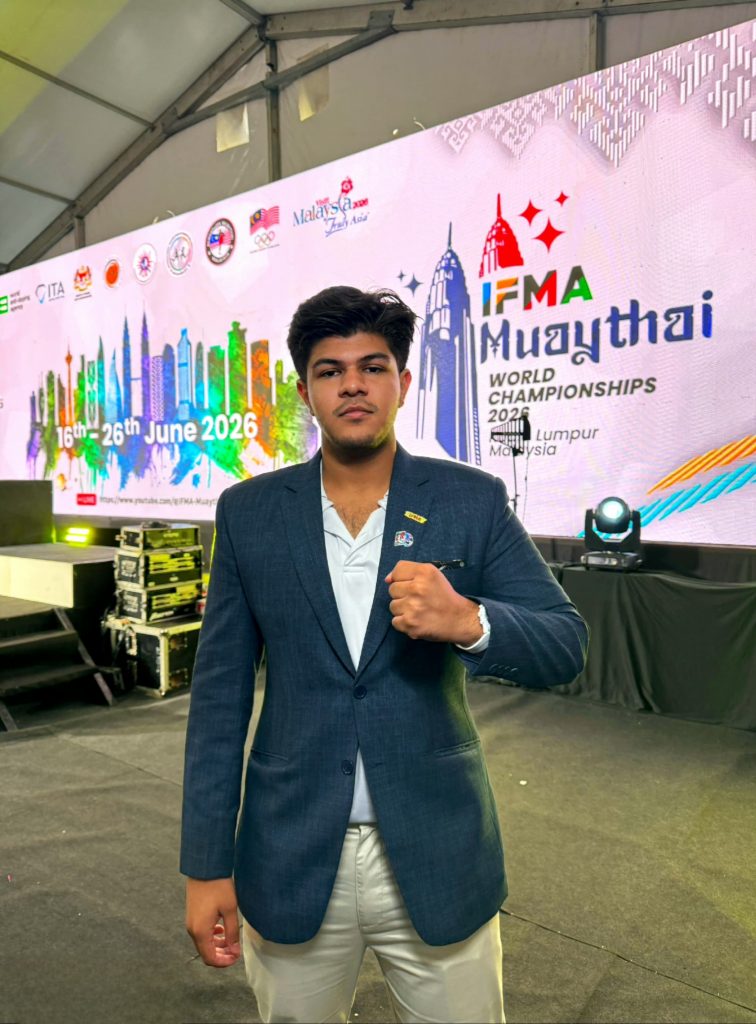
“From 16 to 26 June, I was in Kuala Lumpur representing IFMA at two of the biggest Muaythai events on the international calendar: the IFMA Senior World Championships and the ISF School World Championships. Ten days. One city. And more lessons than I expected.
We stayed in the heart of Kuala Lumpur, the capital of Malaysia, and travelled with the IFMA team. Once we were on the ground, it felt like the whole world had shown up. I was working alongside colleagues from all around the world.
My role was never fixed. I was supporting at the IFMA booth, then covering content for the IFMA series on the Olympic Channel, then assisting with logistics, and supporting IFMA President, Dr Sakchye Tapsuwan and General Secretary who is also our UTS President Stephan Fox whenever they needed an extra hand.
That is just how events work. You go where you are needed. Some things became frustrating, and some things had to be improvised on the spot, but that is the reality of running anything at this scale. Honestly, I would not have had it any other way.
A big part of my time was spent on camera for the Olympic Channel content and IFMA’s social media. I was interviewing referees, VIPs, athletes, Wai Kru judges, combat bout judges, and many others. It was one of those experiences where you realise that the competition is only half the story.
The part that stayed with me was speaking to athletes who had come from countries dealing with real instability. And yet, they still showed up. They still competed and represented their nations.
Being able to capture even a small piece of that and share it with the world felt like the whole point of why we do this work. Sport does not wait for perfect conditions, and neither do the people who love it.
Development, Culture and Governance
The ISF School World Championships brought together young Muaythai athletes, mostly between 13 and 17 years old, from all over the world. The venue was packed and loud, with supporters from dozens of countries all mixed together in the stands. The energy was something else.
One of the highlights for me personally was seeing the tatami mat Muaythai format brought to life on an international stage. That was Stephan Fox’s idea, and watching it executed in front of that kind of crowd made it clear why it works.
Instead of putting young athletes in a full ring under a proper amateur ruleset, the bouts were held on tatami mats with athletes wearing full protection, including headgear, body guards, shin guards and heavier gloves. No ring, no ropes, just the sport stripped back to its core and made super safe for younger competitors to enjoy the experience of competing.
It removes the intimidation factor of stepping into a ring and replaces it with something that still feels real and competitive, but is genuinely age-appropriate. Watching young athletes from different countries compete on the mats, with that kind of energy in the crowd around them, was one of those moments that reminded me why grassroots sport development matters so much.
I also got to meet Bassam Murthasa from Sri Lanka, our UTS Young Ambassador and an IFMA athlete. Meeting him in person once again was a reminder of what this whole ecosystem is actually building towards. These are real young people whose lives are being shaped by sport, and you feel that when you are in the stadium with them.
The Senior World Championships raised the level considerably. The bouts were sharper, the stakes were higher, and the caliber of athlete on the floor reflected that.
One fight I had been looking forward to was between Touizi Mohamed from the UAE and Gianny De Leu from Belgium. Two athletes from very different parts of the world, meeting on the same mat. That is Muaythai at its best. I also got to watch Tilly Bell from Team Australia compete, which was great to see.
The opening ceremony was one of the most entertaining I have been to. Local Malaysian performers brought traditional dances to the stage in front of an international crowd, and it set a tone that carried through the whole event. These championships are never just a competition. They are a meeting point for cultures.
Beyond the competition floor, I attended the IFMA Executive Committee meeting. Being in that room and seeing how national federations communicate and align at an international level was genuinely eye-opening. It gave me a much clearer picture of how global sport governance works in practice, not just on paper.
The highlight of this trip was not any single fight or event. It was the connections. Connections with athletes, colleagues, and people from completely different backgrounds who all care deeply about this sport and what it represents.
What surprised me most was the Local Organising Committee. They pulled the entire event together under enormous pressure and in a very short timeframe. Watching that happen up close taught me something I will carry with me for a long time: you should never take no for an answer. Every obstacle thrown at you is never too big to overcome. You just have to refuse to let it stop you.
If there is one thing I want people to take away from reading this, it is that no matter how tough things get, not just at work but in life, you need to step back, look at the bigger picture, and then make your next move.
Life is like chess. You can plan all you want, but what is the point in planning if you do not even make your first move?”
What the UTS Team Took Away
Three voices, one conclusion. A world championship is built by far more people than the athletes who compete in it. It is built by coaches, officials, organisers, volunteers and the teams behind the cameras who make sure the stories are not lost. Together, the reflections from Cheyenne, Aaliyan and Sean show the many different sides of an international sporting event through the eyes of the UTS team. There are the athletes who step onto the mat with courage, the coaches who guide them, the officials who uphold the standards of competition, the organisers who work under pressure, and the media and support teams who help capture the stories that might otherwise go unseen.
The IFMA ISF World School Muaythai Championships and the IFMA Senior World Championships in Kuala Lumpur were not only a showcase of elite performance and young talent. They were a reminder of what sport can represent when it is rooted in respect, inclusion, culture and shared purpose.
After ten days in Kuala Lumpur, the memories left behind were not only of fights, medals, ceremonies and content created. They were memories of people, passion, culture and the powerful ability of sport to unite individuals from across the world.
For Cheyenne, Aaliyan and Sean, Kuala Lumpur was a first. First accreditation, first media zone, first taste of the pace, pressure and purpose of international sport. They arrived as support staff and left as part of a global community, carrying lessons in resilience, adaptability and respect that no office day could teach.
This is what United Through Sports believes development looks like in practice. Young people given real responsibility, trusted in demanding environments, and growing through the experience. The championships have ended, but for these three, the journey in international sport has only just begun. The championships may have ended, but the lessons, connections and inspiration will continue long after the final bell.